

Hunter Nation Takes Center Stage: On Wisconsin Outdoors Features Organization’s Impact on Elections and Wolf Management
The bi-monthly outdoor publication spotlights Hunter Nation’s voter mobilization success and advocacy for science-based wolf management — Covered by On Wisconsin Outdoors (January/February 2026)
On Wisconsin Outdoors (OWO) put Hunter Nation front-and-center in its January/February 2026 issue—starting with cover messaging that captures the mission plainly: Hunter Nation is stepping up to protect hunting heritage by impacting elections and defending traditions tied to “wolves and whitetails.”
That recognition matters because Hunter Nation’s work is not abstract advocacy. It is measurable, field-tested, and built around a simple truth: policy follows participation. When hunters vote consistently, lawmakers and agencies are forced to treat hunting families as a priority—not an afterthought. OWO’s advocacy coverage featuring Hunter Nation Wisconsin State Director Chris Vaughan underscores that point and puts Hunter Nation’s turnout mission directly in front of the readers who live this fight every season
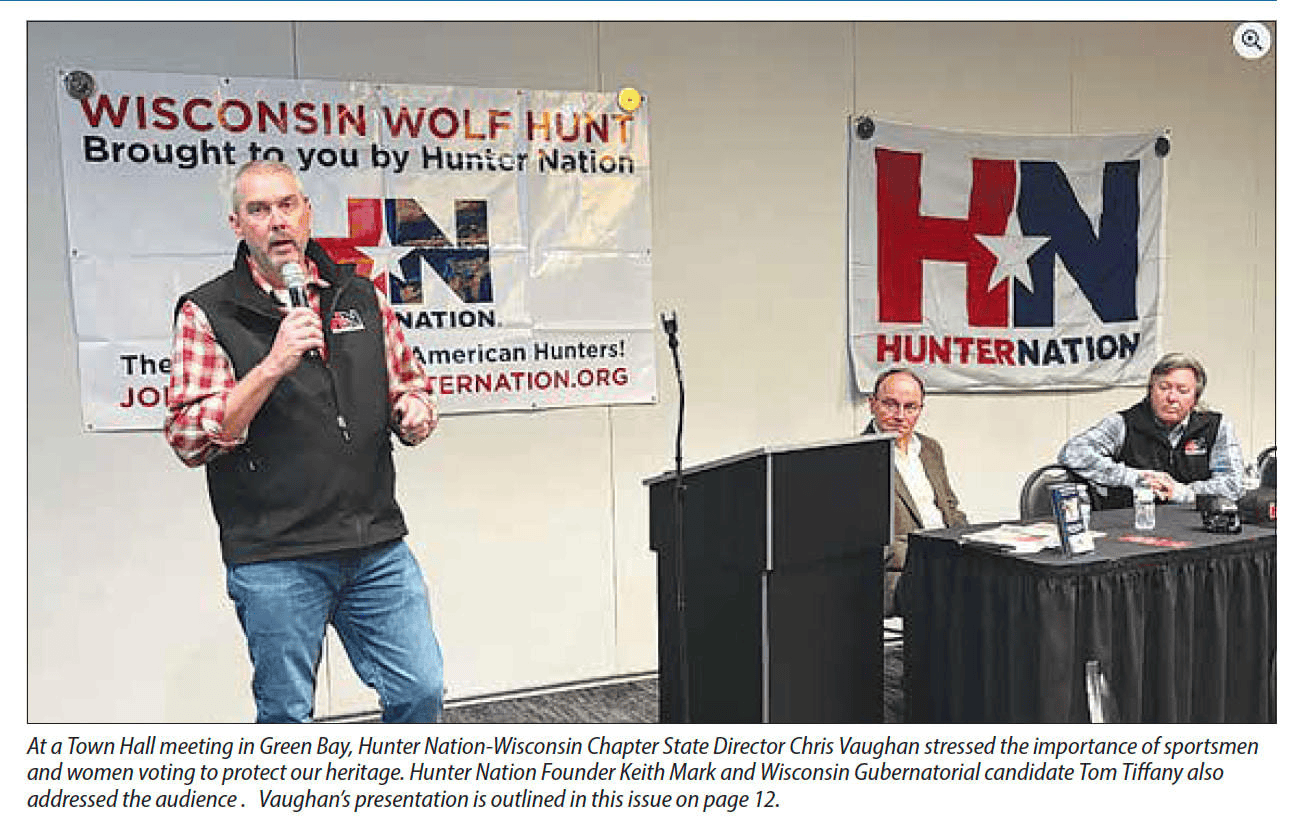
“We want hunters voting their values! We need to keep the pressure on our elected officials and NEVER miss an election.”
Chris Vaughan, Wisconsin State Director, Hunter Nation
Turning Wisconsin Hunters Into a Civic Force
OWO highlights the scale of Wisconsin’s hunting community—855,000 licensed hunters—and the civic gap Hunter Nation was built to close: before Hunter Nation, 50% of licensed hunters did not vote. That is not just a statistic; it is a structural disadvantage for sportsmen when decisions about seasons, access, conservation priorities, and predator control are being shaped without their consistent participation.
The issue also notes the national scope of Hunter Nation’s engagement work since 2016—12+ million hunters across all 50 states. But what makes the Wisconsin story stand out is that OWO pairs the mission with results. OWO reports that Hunter Nation was directly responsible for getting 475,498 licensed Wisconsin hunters out to vote in the 2024 election, including first-time voters and hunters who had been disengaged for years.
OWO includes the following breakdown of those Wisconsin turnout outcomes:
-
20,259 hunters who hadn’t voted in 16 years
-
82,429 hunters who had voted only once in 16 years
-
15,307 first-time voters
That is the Hunter Nation model in action: identify the sleeping giant inside the hunting community, mobilize it, and translate it into consistent civic participation. OWO’s coverage reflects what hunters have long known—when sportsmen act like an organized bloc, they become impossible to ignore.
Wolves and Whitetails: Why This Fight Is on the Cover
OWO’s issue also reinforces why wolf management remains a defining challenge for Wisconsin’s outdoor community. In the two-page “Wolf Tracks” editorial, OWO’s publisher addresses wolf population estimates, trail-cam evidence, and depredation concerns with urgency—amplifying a core accountability principle Hunter Nation has pushed: responsible wildlife management depends on accurate data and transparent decision-making.
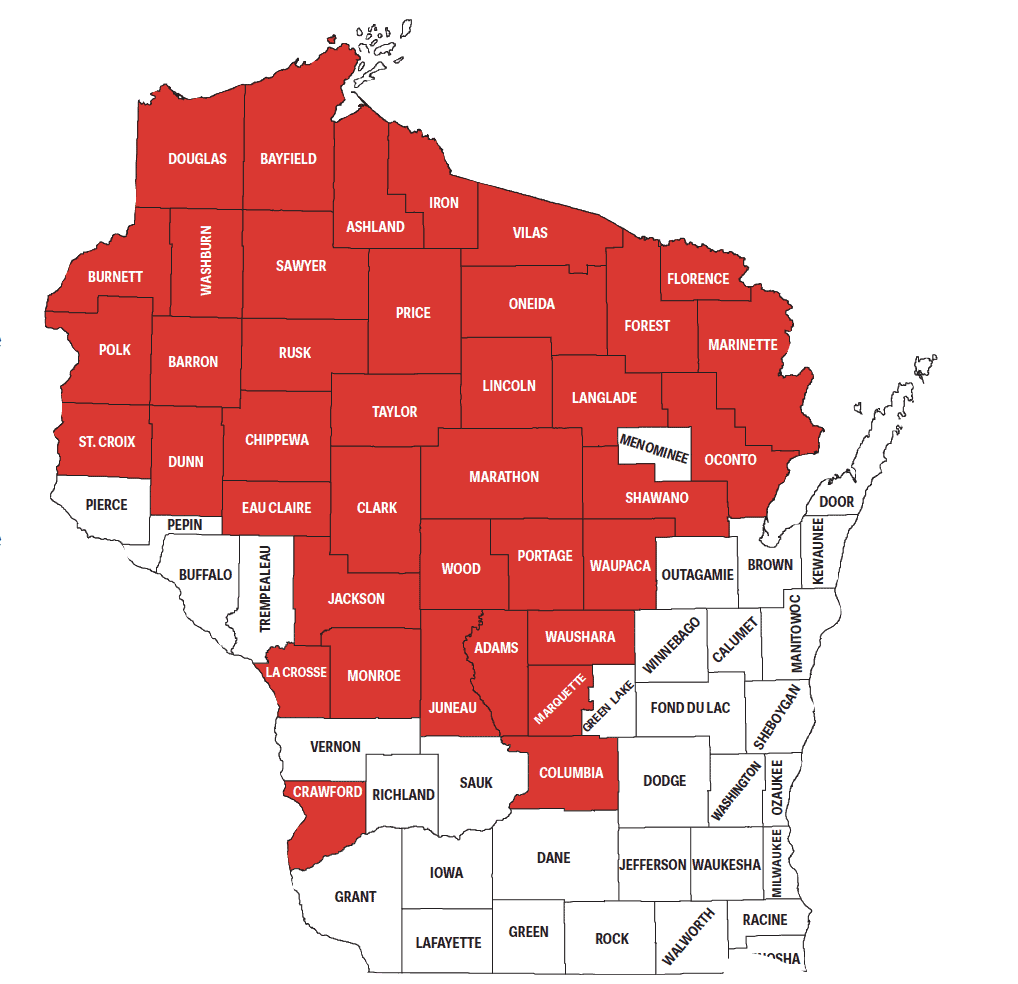
The editorial challenges the Wisconsin DNR’s stated wolf population estimate of 1,226 and discusses evidence shared by hunters and readers that raises questions about whether official counts reflect what is being observed in the field.
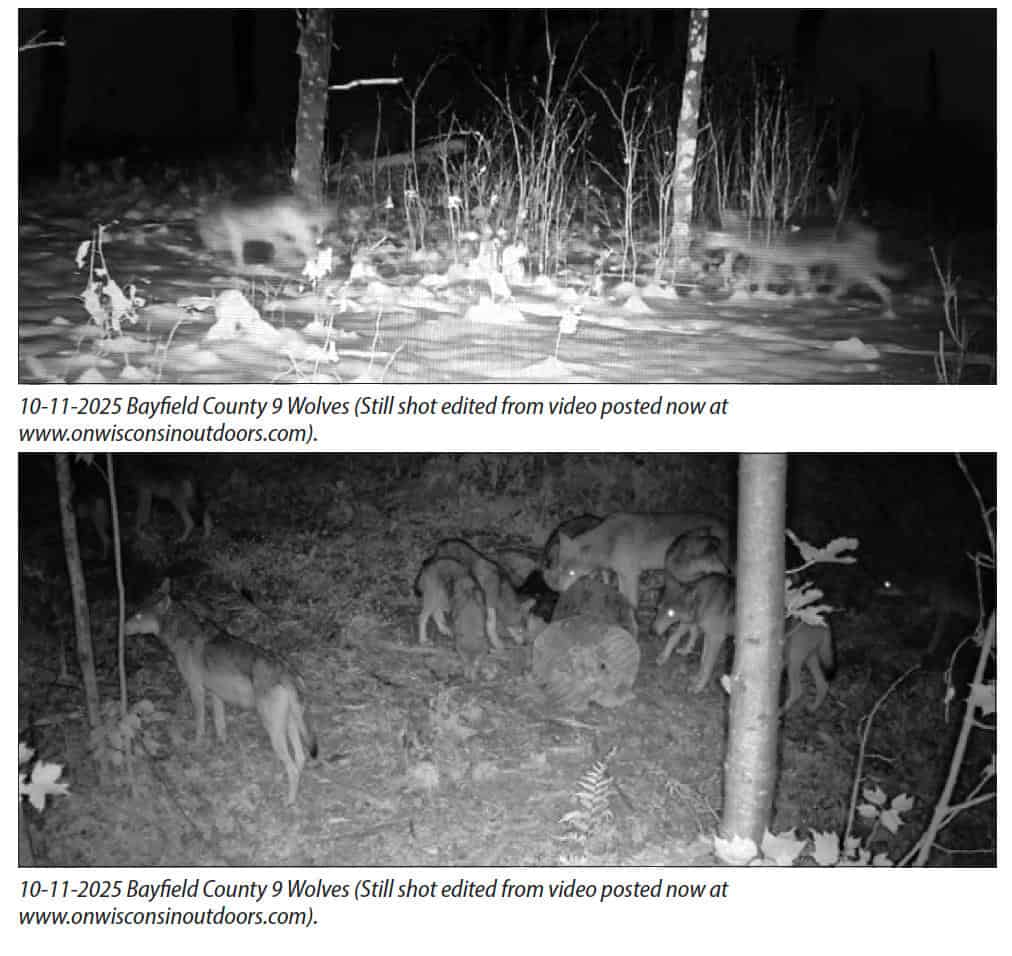
In referencing Vaughan’s presentation, OWO quotes Vaughan on trail-cam images and uses that evidence to press an accountability question that resonates statewide.
“There are 42 wolves total in these photos.”
Chris Vaughan, as quoted in On Wisconsin Outdoors’ “Wolf Tracks” editorial
OWO further notes it has been conducting its own informal wolf census effort, describing reports of large packs and depredation incidents involving hunting dogs and livestock. The message to readers is consistent with Hunter Nation’s approach: trust hunters on the ground, demand transparency from agencies, and insist that policy reflect reality—not talking points.
Science-Based Management Starts With Accurate Numbers
OWO’s editorial explicitly connects wolf policy to the foundational requirement of credible data. That framing aligns with Hunter Nation’s emphasis on science-based wildlife management and clear, measurable targets—because predator management decisions affect deer herds, hunting opportunities, rural livelihoods, and the long-term balance of Wisconsin’s ecosystems.
“Science-based wildlife management is only possible with accurate numbers of predator and prey serving as the foundation for decisions.”
Dick Ellis, Publisher, On Wisconsin Outdoors
In the advocacy coverage, Hunter Nation’s policy position is presented as practical and outcomes-focused: Wisconsin needs a numeric wolf population goal and a management framework grounded in science rather than social pressure. That demand for clarity is not ideological—it is operational. Without transparent targets and credible estimates, decision-making becomes opaque and accountability disappears.
Legislation and Leadership: The Policy Pathway OWO Highlights
OWO’s editorial ties wolf management directly to legislative action and elected leadership. The issue references H.R. 845 (Pet and Livestock Protection Act), notes it passed the U.S. House on December 18 by a vote of 211–204, and describes the bill’s aim to delist gray wolves federally and remove judicial review. OWO frames this as necessary to protect state-level, science-based management from courtroom reversals.
At the state level, OWO also references Wisconsin Bill 687, which the editorial explains would require the DNR to establish a statewide wolf population goal as part of wolf management planning. In other words, the publication places wolf policy where Hunter Nation has long argued it belongs: in a framework of measurable goals, enforceable accountability, and leadership willing to act.
Accountability for Agencies and Priorities
OWO’s advocacy coverage also includes tough accountability questions about how Wisconsin’s wildlife systems are managed and funded. The issue includes the claim that the DNR spent less than 50% in FY 2023–24 on programs that primarily benefit hunters and anglers—reinforcing Hunter Nation’s broader point that the people who fund conservation and management deserve transparency and results.
The Power of Partnership
On Wisconsin Outdoors’ extensive coverage of Hunter Nation—from cover billing to a full-page advocacy feature to a wolf-management editorial—shows growing recognition that protecting hunting heritage requires both grassroots mobilization and policy change. OWO’s commitment to elevating citizen-submitted trail camera evidence mirrors Hunter Nation’s approach: trust hunters on the ground, demand transparency from agencies, and let the facts speak for themselves.
“We’re fighting for balance, for science, and for the future of hunting in Wisconsin.”
Chris Vaughan, Wisconsin State Director, Hunter Nation
The January/February 2026 issue reinforces what Hunter Nation has said from the start: when sportsmen and women stand united, speak with evidence, and refuse to sit on the sidelines, both the media and policymakers have to pay attention.
OWO’s editorial closes with a direct challenge to its readers to keep documentation coming and to follow the evidence wherever it leads. As Ellis concluded, reader photos will continue to test official estimates—“Help us verify truth in numbers.”
Hunter Nation is proud to be featured by publications like On Wisconsin Outdoors that take wildlife management seriously and recognize the power of the American hunter as both conservationist and citizen.
This piece is adapted from On Wisconsin Outdoors’ January/February 2026 issue featuring Hunter Nation. The magazine archive can be viewed here:
On Wisconsin Outdoors Magazine Archive: http://www.onwisconsinoutdoors.com/Magazines